Rainy Season on Flores: What Overland Travel Is Really Like
August 24, 2026 · Komodoairporttransfer Editorial Desk
Flores’ rainy season runs roughly from November to March, wettest around January and February. Overland travel keeps going — our cars drive the Trans-Flores road all year — but the smart plan uses morning starts, shorter days and a buffer day. Here is the honest picture, not the brochure one. Questions: +62 811 3810 5742.
When it rains, and how
The wet season is not five months of sitting in a hotel. The usual pattern is a bright or hazy morning, cloud building through midday, then rain in the afternoon or evening — sometimes an hour of it, sometimes a night of it. The mountain interior around Ruteng and Bajawa catches more rain and fog than the coast, and Labuan Bajo itself often stays drier than the highlands on the same day. Patterns shift from year to year, so treat every forecast — including this one — as a probability, not a promise. Nobody can sell you a dry week in February, and you should be suspicious of anyone who tries.
What rain does to the Trans-Flores road
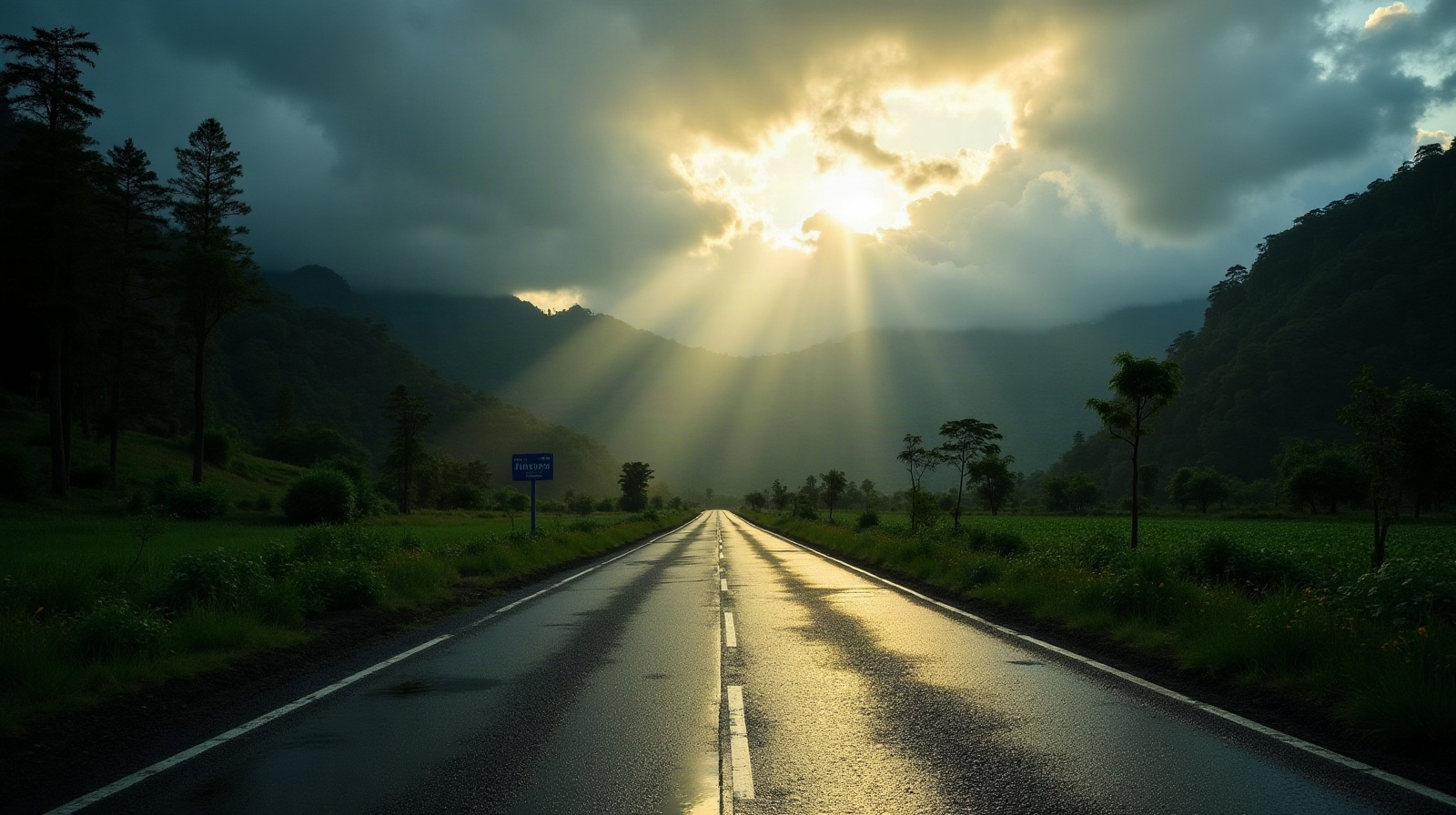
The Trans-Flores highway is sealed for almost its entire length, but it is a mountain road: narrow, winding, and cut into slopes that get very wet. After heavy rain, landslips and fallen trees can close a section for a few hours while crews clear it. Our drivers cover this road week in, week out — it is the same route as our Wae Rebo trips and every overland departure — so they hear about closures early and know where the alternates are. The working rules we drive by in the wet months are simple: start early, because mornings are the driest driving hours; never plan the last leg in darkness and rain together; and keep the day’s distance shorter than you would in August.
Route by route, honestly
| Route | Wet-season reality | Our advice |
|---|---|---|
| Labuan Bajo city tour | Caves are fine in rain; Cunca Wulang’s gorge can run too strong to swim after a downpour | Go in the morning; keep the waterfall flexible |
| Melo village | Short climb, occasional fog at the viewpoint | Fine year-round; afternoon light is a gamble |
| Wae Rebo (2D1N) | Trek gets muddy and slippery, cloud can replace the valley view; the village at altitude is cold at night | Real shoes, a rain layer, and no attempt to compress it — it stays a two-day trip |
| Ruteng / Bena / Bajawa | More rain and fog than the coast; drives run slower | Shorter daily distances, morning driving |
| Kelimutu | The crater is often clouded at dawn; the lakes may not show at all | Build in a spare morning to try twice |
Kelimutu in the wet: the hardest truth
Kelimutu is the one place where the season can genuinely take the prize away. The three crater lakes are a dawn sight, and in the wet months dawn is when the summit is most likely to sit inside a cloud. Some mornings it clears in twenty minutes; some mornings it never does. We will not pretend otherwise. What actually improves your odds is time: a spare morning in Moni to try again costs one hotel night, and it has saved more Kelimutu trips than any weather app. The overland east remains a 3–4 day journey each way, which is why most guests fly back from Ende or Maumere rather than driving the same road twice — details on the Kelimutu overland page.
How we run wet-season overland
Nothing about our pricing changes with the weather. A private car with an English-speaking driver-guide is USD 95 (±IDR 1,500,000) per day, whatever the sky does; the Wae Rebo 2D1N arrangement is about USD 190 (±IDR 3,000,000) with the village donation paid separately; hotels and meals on multi-day routes are quoted on WhatsApp before departure. What does change is how we build the days: earlier starts, a stop order that can flip when a squall sits over one valley, and — on the long crossings — a buffer day we would rather you have and not need. If a road closure eats an afternoon, the itinerary bends instead of breaking. That flexibility is the real argument for a private car in the rain: a bus timetable cannot wait out a landslip, and your driver can.
And the sea side
The same monsoon that waters Flores also stirs the Komodo sea lanes, and in the peak wet months boat schedules can shift with the conditions. The boat side of the trip — open trips, private charters and liveaboards — is run by our sister company, and their team gives straight answers about current sea conditions before you book: check Komodo boat trips and liveaboard sailings with Komodo Luxury. Whenever the boats run, we cover the ground leg — airport to hotel, hotel to harbour — timed to the revised departure, not the original one.
Plan it with someone who drives it
Tell us your dates and what you want to see on WhatsApp +62 811 3810 5742. We will tell you honestly what the season is doing on the ground that month, build the buffer where it earns its keep, and put a driver behind the wheel who has driven that road in the rain more times than he can count.